
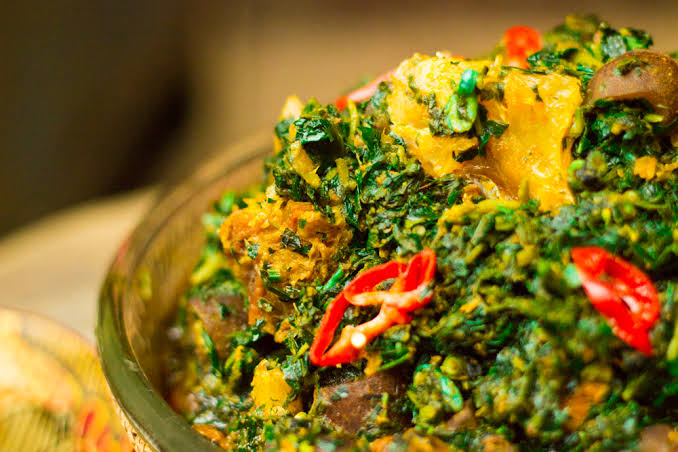
Ibiedik Ikong is one of Nigeria’s most celebrated soups — a dense, deep-green vegetable soup loaded with meat, fish, and leafy vegetables. If you’ve ever wondered what makes it different from other Nigerian soups, why it has a reputation for being expensive, or how to make an authentic pot of it at home, this guide covers all of it in one place.
What Is Ibiedik Ikong?
Edikang Ikong (sometimes spelt Edikaikong or Editan) is a vegetable soup that originated among the Efik people of Cross River State and the Ibibio people of Akwa Ibom State, in Nigeria’s South-South region. The name itself comes from the Efik/Ibibio language: “ikong” refers to vegetables, and the soup is built around two specific leafy greens — pumpkin leaves (known locally as ugu or “ikong ubong”) and water leaf.

Unlike lighter Nigerian soups that use one or two proteins, Edikang Ikong is known for stacking multiple protein sources into a single pot — beef, dried fish, stockfish, cow skin (kanda), periwinkles, and crayfish are all common inclusions. This is part of why the soup has the reputation it does: it isn’t a quick, cheap dish. It’s a soup built for celebration, for feeding guests well, and for genuinely nourishing the body.
Why Is It Called a “Rich Man’s Soup”?
Across Nigeria, Edikang Ikong carries a reputation as a soup mostly associated with wealthier households, and there are practical reasons for that. The ingredient list is long and the individual components — stockfish, dried fish, beef, periwinkles, palm oil, and two separate types of leafy vegetables — add up quickly. A proper pot uses generous quantities of protein relative to the vegetables, rather than stretching a small amount of meat across a large pot of soup.
Beyond cost, there’s also a nutritional reputation behind the name. Because the soup is protein-dense and vegetable-rich at the same time, it’s traditionally recommended for people recovering from illness, for nursing mothers, and for anyone who needs a nutrient boost. It’s common in Efik and Ibibio households to prepare Edikang Ikong specifically for someone who has just been discharged from the hospital or is convalescing at home.
Core Ingredients
A traditional pot of Edikang Ikong typically includes:
- Pumpkin leaves (ugu/ikong ubong) — the primary green, shredded finely
- Water leaf — adds bulk and a slightly different texture; releases water as it cooks, which is part of why the vegetables are prepared a specific way (more on that below)
- Beef — usually a well-seasoned assortment of cuts
- Stockfish — dried, unsalted whitefish, soaked and softened before cooking
- Dried fish — smoked or sun-dried fish, deboned
- Cow skin (kanda) — adds a chewy texture that’s popular in many Nigerian soups
- Periwinkles — small shellfish, either fresh or dried, adding a briny flavor
- Crayfish — ground, for depth of flavor
- Palm oil — used generously; in a proper Edikang Ikong, the palm oil largely functions as the liquid base of the soup rather than water or stock
- Onions, pepper, and seasoning cubes — for base flavor
- Snail (optional but common in more elaborate versions)
The absence of added water is one of the more distinctive things about this soup. Because water leaf naturally releases a significant amount of liquid as it wilts and cooks down, most recipes deliberately avoid adding extra water, relying on the vegetable’s own moisture plus the palm oil to create the soup’s consistency.
Step-by-Step: How to Cook Ibiedik Ikong
1. Prepare the vegetables
Wash the pumpkin leaves and water leaf thoroughly. Chop both finely — pumpkin leaves are typically cut smaller than water leaf since they’re tougher. Some cooks lightly squeeze the water leaf after chopping to control how much liquid it releases, but this step is optional depending on how much moisture you want in the finished soup.
2. Cook the proteins
In a large pot, combine the beef, kanda, and stockfish with diced onions and seasoning cubes. Use as little water as possible — just enough to steam the meat until tender, since Edikang Ikong is not meant to be a watery soup. Once the beef and kanda are cooked through and the stockfish has softened, add the dried fish (deboned) toward the end, since it typically needs less cooking time.
3. Add the palm oil, crayfish, and pepper
Once the proteins are tender, pour in the palm oil generously. Add the ground crayfish and pepper (ground or blended, according to taste), then let everything simmer together for about 8–10 minutes so the palm oil can properly render and combine with the stock from the meat.
4. Add periwinkles and water leaf
Add the periwinkles first, followed by the chopped water leaf. Let this cook for around 5 minutes — water leaf doesn’t need long, and overcooking it causes it to lose its texture and release even more liquid than needed.
5. Finish with pumpkin leaves
Add the shredded pumpkin leaves last, since they’re the most delicate ingredient and require the least cooking time — usually just 2–3 minutes is enough for them to wilt into the soup. Taste and adjust the seasoning cubes or salt at this stage. Turn off the heat once the pumpkin leaves have softened but still hold some color and texture.
6. Serve
Edikang Ikong is traditionally served with a swallow — fufu, pounded yam, semovita, or eba are all common pairings. The soup is thick enough that it clings well to a swallow, which is part of the appeal.
Nutritional Value
Edikang Ikong is frequently cited by Nigerian nutritionists and home cooks alike as one of the healthiest traditional soups, largely because of the vegetable content. Pumpkin leaves are a good source of vitamin A, iron, and folate, while water leaf contributes additional vitamins and minerals along with fiber. Combined with the protein density from beef, fish, and shellfish, the soup delivers a fairly complete nutritional profile in a single dish — which is part of why it’s so often recommended for recovery, pregnancy, or general wellness.
That said, because palm oil is used liberally and the soup includes multiple protein sources, it is also calorie-dense. This isn’t a criticism of the dish so much as context — it’s built to be substantial, not a low-calorie option.
Common Variations
While the Efik and Ibibio version is considered the standard, Edikang Ikong has regional and household variations:
- Substituting water leaf: Water leaf can be difficult to find outside Nigeria and parts of West Africa. Cooks abroad often substitute watercress, spinach, or malabar spinach, though the flavor and texture differ somewhat from the original.
- Protein swaps: Some households reduce or omit stockfish and kanda for cost or dietary reasons, relying more heavily on beef, chicken, or just fish.
- Vegetarian versions: Though less traditional, some modern adaptations remove meat and fish entirely, relying on vegetable stock and additional seasoning to compensate for the lost depth of flavor.
- Editan soup comparison: Edikang Ikong is sometimes confused with Editan soup, a related but distinct Efik dish that uses a bitter leaf variant (editan) rather than pumpkin leaf and water leaf as the primary greens.
Ibiedik Ikong vs. Efo Riro
Outside the South-South region, Edikang Ikong is often compared to Efo Riro, the Yoruba vegetable soup, since both are vegetable-forward and use similar proteins. The key difference is the greens: Efo Riro typically uses shredded spinach or a leaf called “efo shoko” or “efo tete,” while Edikang Ikong is defined specifically by the pumpkin leaf and water leaf combination. The cooking method also differs slightly, with Edikang Ikong placing more emphasis on minimal added water and a thicker, more tightly reduced consistency.
Frequently Asked Questions
Is Edikang Ikong the same as vegetable soup? Edikang Ikong is a specific type of Nigerian vegetable soup, but “vegetable soup” is sometimes used as a general English translation or umbrella term. Not all Nigerian vegetable soups use the same greens or preparation method, so Edikang Ikong is best understood as one distinct dish within that broader category.
Can I make Edikang Ikong without palm oil? Palm oil is central to the traditional flavor and texture of the soup, since it functions as the base liquid. Substituting other oils will change the taste significantly and isn’t considered authentic, though some health-conscious cooks do reduce the quantity used.
How long does Edikang Ikong last in the fridge? Like most Nigerian soups made with palm oil and a variety of proteins, it typically keeps well for 3–5 days refrigerated, and can be frozen for longer storage. Reheating thoroughly is recommended given the meat and fish content.
What can I use instead of water leaf? Watercress or malabar spinach are the most commonly recommended substitutes outside Nigeria, though neither perfectly replicates the original texture or water content of true water leaf.
Final Thoughts
Ibiedik Ikong is more than a soup — it’s a dish tied closely to Efik and Ibibio identity, built around the idea that food meant for celebration or recovery should hold nothing back on quality or nutrition.
Whether you’re cooking it for the first time or perfecting a family recipe, the fundamentals stay the same: generous protein, minimal added water, and the distinctive pairing of pumpkin leaves with water leaf that gives the dish its name and its character.