
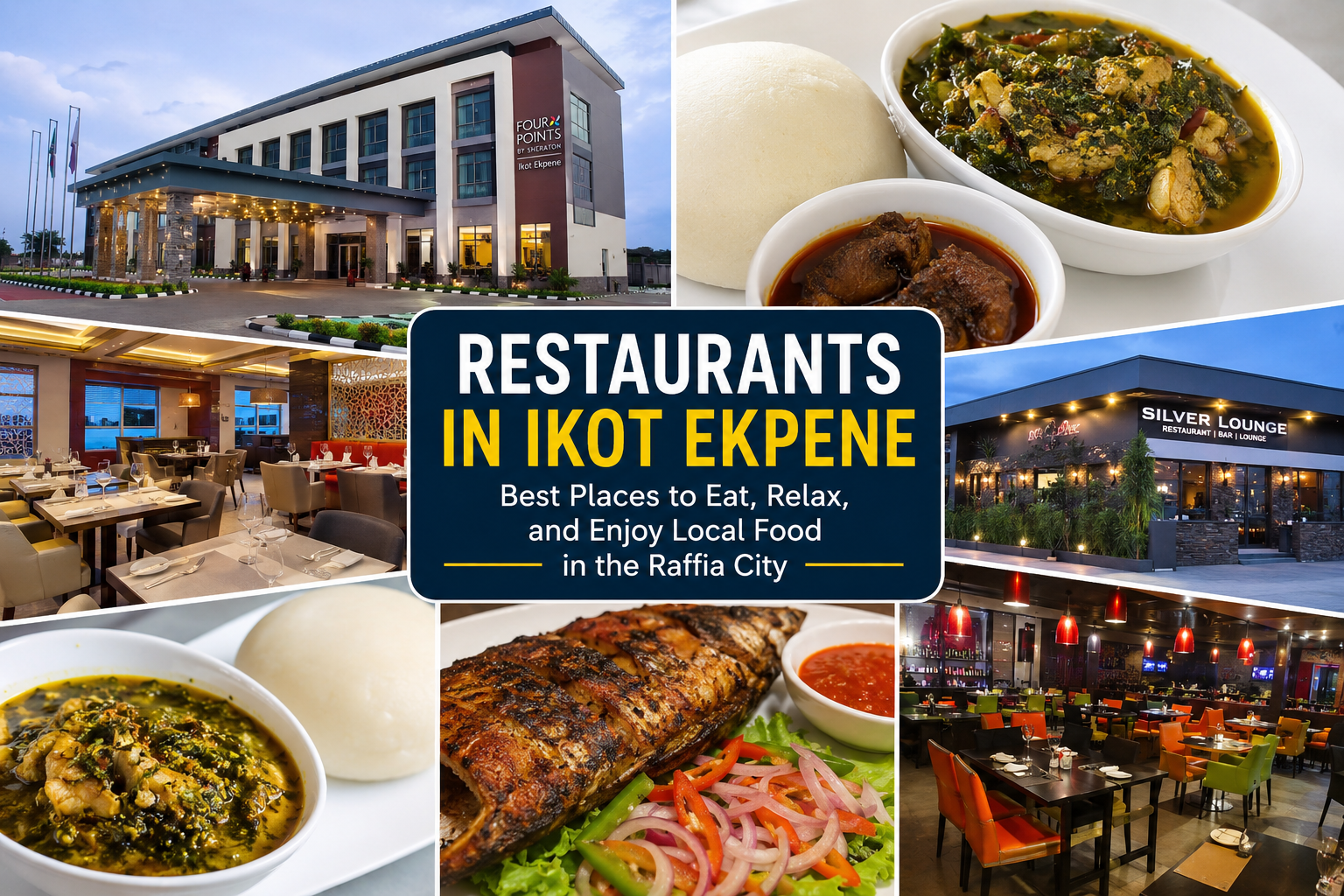
Ikot Ekpene may be famous as the Raffia City of Akwa Ibom State, but anyone who spends a few days here quickly discovers that it is also a rewarding destination for food lovers. Unlike larger cities where restaurants compete through flashy interiors and aggressive marketing, dining in Ikot Ekpene is more authentic. The city combines modern hotel restaurants, contemporary cafés, lively lounges, and traditional eateries that have quietly built loyal followings over the years.
Whether you are visiting for business, attending a wedding, exploring the region, or simply passing through on your way to another part of Akwa Ibom, you will find restaurants that cater to virtually every taste and budget. From freshly prepared native soups to grilled seafood, continental dishes, and everyday Nigerian favourites, Ikot Ekpene offers far more culinary variety than many first-time visitors expect.
One of the city’s most recognized dining destinations is The Palm Inem Ndidia Restaurant, located inside Four Points by Sheraton Ikot Ekpene. As the hotel’s main restaurant, it provides an elegant dining experience suitable for both residents and walk-in guests. The restaurant serves buffet meals alongside an à la carte menu, making it ideal for breakfast meetings, business lunches, family dinners, and weekend dining. Guests can choose from Nigerian favourites as well as international cuisine, all prepared in a comfortable, air-conditioned environment. The consistency of service, spacious seating, and professional hospitality make it one of the safest choices for visitors who prefer a premium restaurant experience.
Within the same hotel complex is Afe Ukot Bar, a relaxed dining spot that blends casual meals with entertainment. Unlike a traditional restaurant, Afe Ukot focuses on grilled specialties, light meals, cocktails, and beverages served in an atmosphere designed for relaxation. During the evenings, it becomes a popular gathering point for hotel guests, professionals, and visitors looking to unwind after a busy day. Grilled fish, barbecue, chicken, and refreshing drinks are among the attractions that keep customers returning.

Another establishment that frequently attracts attention is Roots Restaurant & Café. The restaurant has earned recognition among visitors looking for a quieter dining environment where good food meets a comfortable café setting. Rather than rushing customers in and out, places like Roots encourage longer conversations, making them suitable for informal meetings, dates, remote work sessions, and relaxed family outings. Their menus typically combine Nigerian classics with lighter café offerings, ensuring that different tastes are accommodated.
For those who enjoy nightlife alongside good food, Silver Lounge has become one of the city’s familiar names. While many people associate lounges primarily with drinks and entertainment, establishments such as Silver Lounge have expanded their menus to include grilled fish, barbecue, pepper soup, chicken, rice dishes, and other meals that transform them into evening dining destinations. The atmosphere is usually livelier than a traditional restaurant, making it popular among younger visitors and groups of friends looking for somewhere to eat before enjoying music or social activities.
Another notable option is Siciliañ Lounge, which offers a similar blend of dining and relaxation. Restaurants like these have contributed to changing the perception that Ikot Ekpene offers only traditional food outlets. Instead, they demonstrate that the city continues to develop a more diverse hospitality industry capable of serving different categories of diners, from corporate executives to tourists and local residents.
Beyond the hotels and lounges lies the heart of Ikot Ekpene’s food culture—the local restaurants and neighbourhood eateries that residents patronize every day. These establishments rarely appear in glossy travel brochures, yet they often provide some of the city’s most memorable meals. Across busy roads such as Aba Road, Hospital Road, Uyo Road, and around commercial centres and markets, visitors will find numerous restaurants serving freshly prepared Nigerian dishes from morning until late evening.
Among these are places such as Mama Iquo Restaurant, known for affordable home-style cooking that reflects the flavours of Akwa Ibom households. Diners looking for generous portions of soup and swallow, rice meals, beans, yam, and pepper soup often prefer establishments like this because the emphasis is placed on taste rather than presentation. The atmosphere is simple, the service is direct, and the meals are usually prepared in large quantities throughout the day to ensure freshness.
Crossbee Restaurant is another local name that has gained recognition among residents and travellers. Positioned close to busy transport routes, it attracts commuters, workers, students, and visitors searching for dependable meals without spending hotel prices. Restaurants of this kind play an important role in the local economy because they provide affordable dining options while supporting local farmers, fishermen, meat suppliers, and market traders.
Visitors may also come across businesses such as BlueRich Food and Restaurant, Flakky Foods, and other independently owned restaurants spread across the city. Although these establishments vary in size, they share one characteristic: they serve food that reflects the everyday eating habits of the people of Akwa Ibom. Instead of concentrating solely on fast food, many prepare soups, rice dishes, grilled fish, porridge, beans, yam, and freshly cooked local delicacies that keep customers returning.
Perhaps the greatest strength of dining in Ikot Ekpene is that quality is not always determined by the size of the building. Some of the city’s finest meals are found in modest restaurants with simple décor but outstanding recipes that have been perfected over many years. Long queues at lunchtime are often a better indicator of food quality than expensive furniture or elaborate signage. Local residents understand this well, which is why asking for recommendations from taxi drivers, hotel staff, shop owners, or market traders often leads visitors to hidden culinary gems that cannot easily be found through online searches.
The city also benefits from Akwa Ibom’s reputation as one of Nigeria’s leading food destinations. Restaurant owners have access to fresh seafood, vegetables, spices, palm produce, and locally sourced ingredients that significantly improve the quality of their meals. Fresh fish arrives regularly from nearby fishing communities, while vegetables used in soups such as afang and editan are sourced from surrounding farms, giving many dishes a freshness that is difficult to replicate elsewhere.
Another advantage is the diversity of dining experiences available within a relatively compact city. Someone can enjoy a buffet breakfast in a luxury hotel, eat a plate of authentic afang soup in a local restaurant for lunch, and finish the day with grilled fish and live music in a lounge without travelling long distances. This convenience makes Ikot Ekpene particularly attractive for business travellers, conference delegates, and tourists who prefer exploring a destination through its food.
While online reviews can be helpful, they should not be the only factor influencing your decision. Many excellent restaurants in Ikot Ekpene have little or no digital presence despite serving exceptional food every day. The city’s dining culture still thrives largely on reputation, repeat customers, and word-of-mouth recommendations. That personal connection gives the local restaurant scene a warmth that visitors often remember long after leaving the city.
Ultimately, the best restaurant in Ikot Ekpene depends on what you are looking for. If comfort, premium service, and an international menu matter most, hotel restaurants such as The Palm Inem Ndidia Restaurant are excellent choices. If your goal is to experience authentic Akwa Ibom hospitality and generous local cooking, neighbourhood restaurants and bukas will leave a lasting impression. And if you want food accompanied by music, drinks, and a lively social atmosphere, the city’s lounges provide an enjoyable alternative. Regardless of where you choose to dine, Ikot Ekpene offers a food experience that is welcoming, diverse, and deeply rooted in the culinary traditions of Akwa Ibom State.
What to Eat at Restaurants in Ikot Ekpene
One of the biggest reasons people enjoy dining in Ikot Ekpene is the food itself. While the city has embraced modern restaurants that serve continental meals and popular Nigerian dishes, its greatest strength remains the rich culinary heritage of Akwa Ibom State. Eating in Ikot Ekpene is more than satisfying hunger—it is an opportunity to experience a culture where fresh ingredients, carefully prepared soups, seafood, and traditional recipes have been passed down through generations.
If you are visiting Ikot Ekpene for the first time, your priority should be sampling the local cuisine. Many restaurants proudly prepare indigenous dishes alongside national favourites, giving visitors the chance to discover flavours that are difficult to find elsewhere in Nigeria. Even when a restaurant has a broad menu, it is often the native meals that receive the highest praise from regular customers.
Among the most celebrated dishes is Afang soup, arguably the best-known delicacy from Akwa Ibom. Prepared with afang leaves, waterleaf, assorted meat, dried fish, stockfish, periwinkles, crayfish, and palm oil, the soup delivers a rich combination of earthy and seafood flavours. It is traditionally served with pounded yam, fufu, garri, semovita, or wheat. Many visitors specifically ask for afang soup because it represents the identity of the region and showcases the freshness of locally sourced ingredients.
Another favourite is Editan soup, a unique delicacy prepared from the slightly bitter editan leaf. While the leaf has a naturally bitter taste, experienced cooks carefully process it to achieve a balanced flavour that blends beautifully with fish, meat, crayfish, palm oil, and local seasonings. Editan soup may not be as internationally known as afang, but it remains one of the most respected traditional meals in Akwa Ibom and is widely available in restaurants that specialize in native cuisine.
For seafood lovers, Abak Atama soup deserves special attention. Made from atama leaves and richly flavoured with smoked fish, fresh fish, meat, crayfish, and palm fruit extract, this soup has a deep, smoky taste that reflects the riverine heritage of southern Nigeria. Restaurants that prepare it well often earn loyal customers because the recipe requires patience, skill, and quality ingredients.
Another indigenous meal worth trying is Ekpang Nkukwo, often regarded as one of the signature dishes of Akwa Ibom. Unlike conventional soups, Ekpang Nkukwo is prepared from grated cocoyam wrapped in cocoyam leaves before being cooked with fresh fish, periwinkles, crayfish, meat, palm oil, and aromatic spices. The preparation process is labour-intensive, which is why many visitors prefer ordering it in restaurants instead of attempting to cook it themselves. When properly prepared, it is one of the most memorable meals available in Ikot Ekpene.
Restaurants in Ikot Ekpene are also known for serving excellent pepper soup, a favourite among travellers and residents alike. Whether prepared with catfish, goat meat, assorted meat, fresh fish, or chicken, pepper soup is valued for its rich aroma and warming spices. It is commonly enjoyed in the evenings, especially in lounges and outdoor restaurants where customers pair it with cold drinks while relaxing after work or social events.
Fresh fish is another highlight of the city’s dining scene. Thanks to Akwa Ibom’s access to rivers and coastal communities, restaurants can source quality seafood that is often grilled, barbecued, fried, or prepared in spicy sauces. Grilled croaker, catfish, tilapia, and other locally available fish are popular choices, usually served with fried plantain, yam fries, potatoes, or traditional accompaniments. Many evening restaurants and lounges have built their reputation on perfectly grilled fish seasoned with local spices.
Visitors who prefer familiar Nigerian meals will have plenty of options as well. Almost every restaurant serves classics such as jollof rice, fried rice, white rice with stew, beans, yam porridge, boiled yam with egg sauce, spaghetti, noodles, and plantain. These meals are especially popular among business travellers, families, and customers looking for quick lunches before returning to work.
Breakfast is equally diverse. Hotel restaurants usually offer buffet breakfasts featuring bread, tea, coffee, eggs, sausages, pancakes, cereals, fruits, and Nigerian breakfast staples. Smaller restaurants often prepare akara and pap, moi moi, boiled yam with sauce, noodles, fried eggs, or freshly baked bread. These affordable breakfast options make it easy for visitors to begin their day without travelling far from their accommodation.
No discussion of food in Ikot Ekpene would be complete without mentioning swallow. Pounded yam, eba (garri), semovita, wheat, amala, and fufu are common accompaniments to local soups. Many residents consider swallow and soup the most satisfying lunch because the meals are filling, nutritious, and deeply rooted in local eating traditions. Restaurants usually allow customers to choose their preferred swallow, making it easy to customise the meal according to personal preference.
Meat lovers also have plenty to enjoy. Restaurants regularly prepare grilled chicken, turkey, goat meat, beef, assorted meat, nkwobi, and spicy barbecue. These dishes are particularly popular in lounges and evening restaurants, where customers gather to socialise while enjoying grilled delicacies and refreshing beverages. Suya vendors operating around busy streets further enrich the city’s evening food culture by offering another convenient option for diners.
Although Ikot Ekpene is best known for its indigenous meals, modern restaurants have expanded their menus to include shawarma, burgers, pizza, sandwiches, salads, and light continental dishes. Younger customers, students, and professionals increasingly patronise cafés that combine these modern offerings with coffee, smoothies, milkshakes, and desserts. This blend of traditional and contemporary cuisine reflects the city’s gradual evolution while preserving its cultural identity.
Desserts and beverages are also becoming more varied. Alongside soft drinks and bottled water, many restaurants now serve natural fruit juices, yoghurt, smoothies, mocktails, and locally inspired drinks. Visitors interested in experiencing local flavours may also encounter freshly tapped palm wine, particularly in traditional restaurants and relaxation spots where indigenous cuisine is the main attraction.
Price is another advantage of dining in Ikot Ekpene. Compared with larger Nigerian cities such as Lagos, Abuja, or Port Harcourt, many restaurants offer generous portions at relatively affordable prices. Budget-conscious travellers can enjoy satisfying local meals without overspending, while those seeking premium dining experiences can find upscale hotel restaurants that provide elegant settings and wider menu selections.
Perhaps the greatest attraction of eating in Ikot Ekpene is the freshness of the ingredients. Vegetables often come directly from nearby farms, seafood is sourced from surrounding fishing communities, and many spices are locally produced. This commitment to fresh ingredients gives the city’s restaurants a distinctive taste that visitors frequently remember long after their trip has ended.
Ultimately, the best meal in Ikot Ekpene depends on your appetite and sense of adventure. If you want to experience the true flavour of Akwa Ibom, start with afang soup, editan soup, Abak Atama soup, or Ekpang Nkukwo. Add freshly grilled fish or a bowl of spicy pepper soup, and you will quickly understand why food remains one of the strongest reasons travellers return to Ikot Ekpene. The city’s restaurants are not simply places to eat—they are places where culture, hospitality, and tradition come together on every plate.
How to Choose the Right Restaurant in Ikot Ekpene and Tips for an Enjoyable Dining Experience
With dozens of restaurants, hotels, cafés, lounges, and local eateries scattered across Ikot Ekpene, deciding where to eat can be difficult, especially if you are visiting the city for the first time. The good news is that there is no single “best” restaurant for everyone. The right choice depends on why you are dining, the type of food you want, your budget, and the kind of experience you hope to have. Understanding these factors will help you enjoy the best of Ikot Ekpene’s growing food scene.
The first thing to consider is the purpose of your visit. If you are meeting business associates, entertaining clients, or celebrating a special occasion, a hotel restaurant or an established fine-dining venue is usually the best option. These restaurants offer a quieter environment, comfortable seating, professional service, and a menu that appeals to a wide range of tastes. Business travellers often prefer such locations because they provide privacy for meetings while maintaining high standards of cleanliness and customer service.
If your goal is to experience the authentic taste of Akwa Ibom, however, you should not limit yourself to luxury restaurants. Some of the finest native dishes in Ikot Ekpene are served in modest neighbourhood restaurants and family-owned eateries. These establishments may not have elaborate interiors, but they often prepare meals using recipes that have been perfected over generations. It is in these restaurants that visitors truly discover the flavours that have made Akwa Ibom one of Nigeria’s most respected culinary destinations.
Budget is another important factor when choosing where to eat. Ikot Ekpene offers restaurants for virtually every price range. Students, backpackers, and budget-conscious travellers can enjoy filling meals at affordable local restaurants, while those seeking a more luxurious experience can choose premium hotel restaurants with buffet options and extensive menus. One of the advantages of dining in the city is that even inexpensive restaurants often serve generous portions, making it possible to enjoy quality food without spending excessively.
Cleanliness should never be overlooked. Before placing an order, take a few moments to observe the restaurant’s environment. A clean dining area, tidy tables, properly dressed staff, and organised food preparation areas are usually good signs. Restaurants with steady customer traffic also tend to serve fresher food because ingredients are used more quickly. While appearance alone cannot guarantee quality, it often reflects the management’s attention to detail.
Another useful tip is to pay attention to the menu. A restaurant that tries to serve every possible dish may not prepare each one equally well. Instead, ask staff members about the meals for which the restaurant is best known. Many restaurants have signature dishes that regular customers recommend repeatedly. Choosing these specialties often results in a much better dining experience than selecting random items from an extensive menu.
Timing also plays an important role. Breakfast restaurants usually begin serving early in the morning and offer lighter meals such as tea, bread, eggs, pap, akara, yam, and noodles. Lunch is the busiest period for many local restaurants, especially those serving soups and swallow. Evening dining tends to shift toward lounges and restaurants specialising in grilled fish, pepper soup, barbecue, and drinks. Visiting at the appropriate time allows you to enjoy meals when they are freshest and when the restaurant atmosphere best suits the occasion.
Families travelling with children should prioritise restaurants with spacious seating, clean restrooms, secure parking, and a relaxed environment. Hotel restaurants often meet these requirements because they are designed to accommodate different categories of guests. Couples planning a quiet dinner may prefer cafés or restaurants with soft music and a more intimate atmosphere, while groups of friends usually enjoy lively lounges where meals can be combined with entertainment.
One of the best ways to discover excellent restaurants in Ikot Ekpene is surprisingly simple—ask the locals. Taxi drivers, hotel receptionists, market traders, shop owners, and long-term residents often know which restaurants consistently serve the best food. Their recommendations frequently lead visitors to hidden gems that receive little attention online but have built excellent reputations through years of quality service. In many cases, word-of-mouth recommendations remain more reliable than internet reviews.
If you enjoy trying new foods, do not leave Ikot Ekpene without sampling at least one indigenous meal. Many visitors automatically order jollof rice or fried rice because they are familiar with them, but the city’s true culinary identity lies in dishes such as afang soup, editan soup, Abak Atama soup, Ekpang Nkukwo, and fresh seafood prepared with local spices. Trying these meals provides a much richer understanding of the region’s culture than eating only familiar foods.
Visitors with dietary preferences or allergies should communicate clearly with restaurant staff before ordering. Many local dishes contain seafood, crayfish, palm oil, or particular spices that may not suit everyone. Fortunately, most restaurants are willing to explain ingredients or recommend alternative meals when asked politely.
Food safety is another important consideration. Choose restaurants where meals are prepared fresh and served hot. Freshly cooked food generally offers better flavour and reduces concerns about food handling. If you are ordering seafood, ask what fish is available that day, as many restaurants prepare their freshest catch based on daily supplies from local markets.
For travellers exploring Ikot Ekpene over several days, consider trying different categories of restaurants instead of eating in the same place repeatedly. Enjoy breakfast in a hotel restaurant, lunch in a popular local eatery, and dinner at a lounge known for grilled fish or pepper soup. This approach allows you to experience the full diversity of the city’s food culture while discovering your own favourite dining spots.
Frequently Asked Questions About Restaurants in Ikot Ekpene
What is the best restaurant in Ikot Ekpene?
There is no single answer because the best restaurant depends on your preferences. Hotel restaurants are ideal for premium dining, while local restaurants often provide the most authentic Akwa Ibom cuisine.
What local food should I try in Ikot Ekpene?
Popular dishes include afang soup, editan soup, Abak Atama soup, Ekpang Nkukwo, pepper soup, grilled fish, and a variety of swallow meals served with indigenous soups.
Are there affordable restaurants in Ikot Ekpene?
Yes. The city has numerous local restaurants and neighbourhood eateries where visitors can enjoy delicious meals at reasonable prices without compromising on taste.
Can I find continental meals in Ikot Ekpene?
Absolutely. Many hotel restaurants and modern cafés serve continental dishes alongside Nigerian favourites, giving visitors a wide range of dining options.
Are restaurants in Ikot Ekpene suitable for families?
Yes. Many hotel restaurants and established eateries provide comfortable seating, clean environments, and menus suitable for adults and children alike.
Do restaurants accept cashless payments?
Many modern restaurants, hotels, and cafés now accept bank transfers, POS payments, and debit cards, although carrying some cash is still advisable when visiting smaller local eateries.
Ikot Ekpene’s restaurant scene continues to evolve as new cafés, lounges, and eateries open to serve both residents and visitors. Yet despite this growth, the city’s greatest strength remains unchanged: genuine hospitality and delicious food prepared with fresh local ingredients. Whether you choose a luxury hotel restaurant, a bustling neighbourhood buka, or a quiet café tucked away on a busy street, you are likely to leave with more than just a satisfying meal. You will have experienced a small but memorable part of the culture, warmth, and culinary heritage that make Ikot Ekpene one of Akwa Ibom’s most rewarding destinations for food lovers.